Harmonious Deconstruction: The Row and Minimalist Art
An exploration into the brand's artistic influences

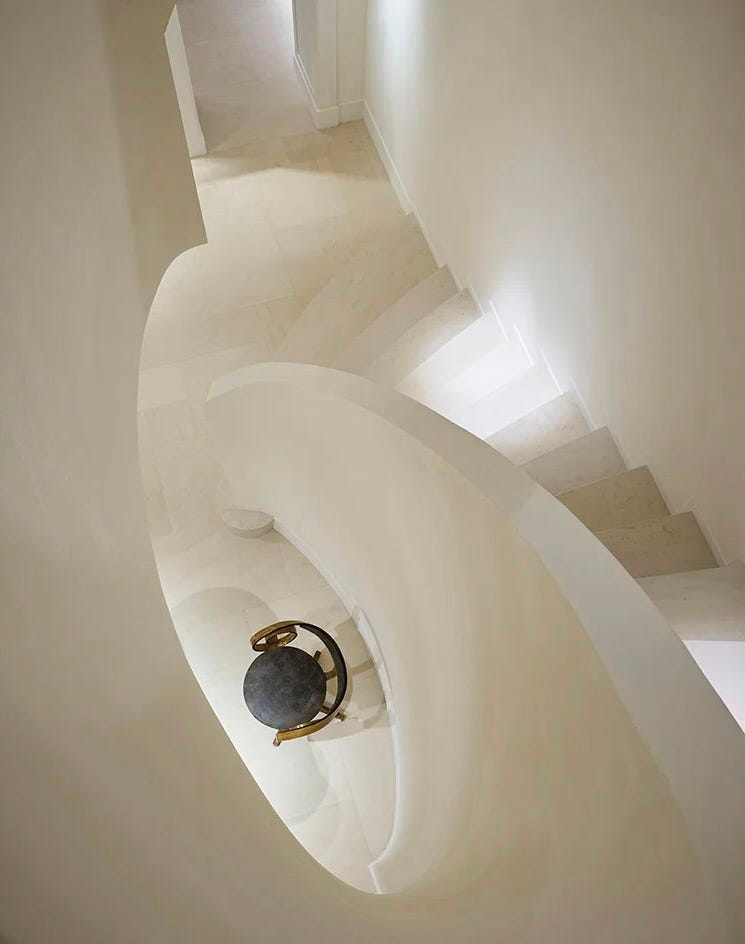
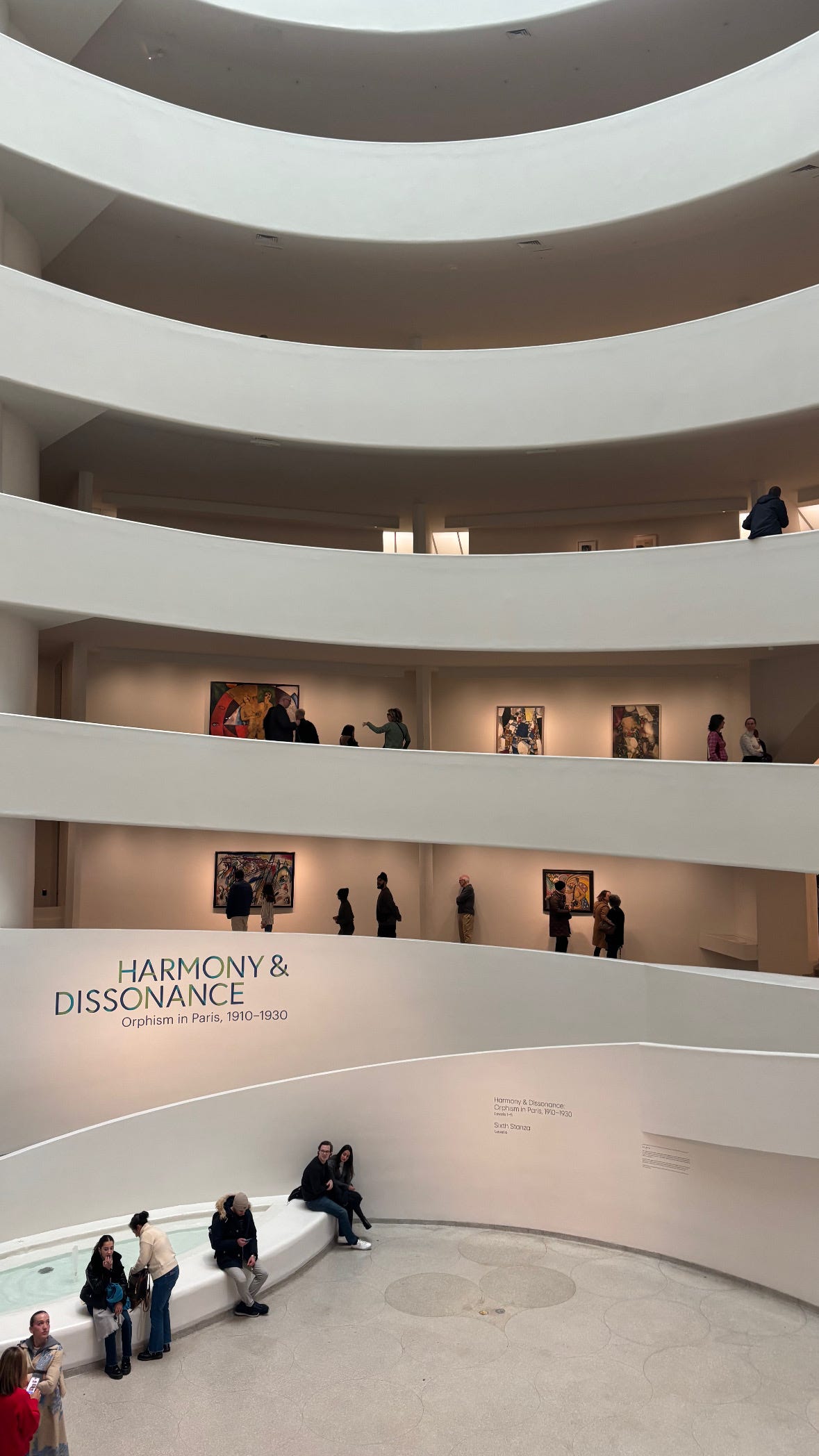
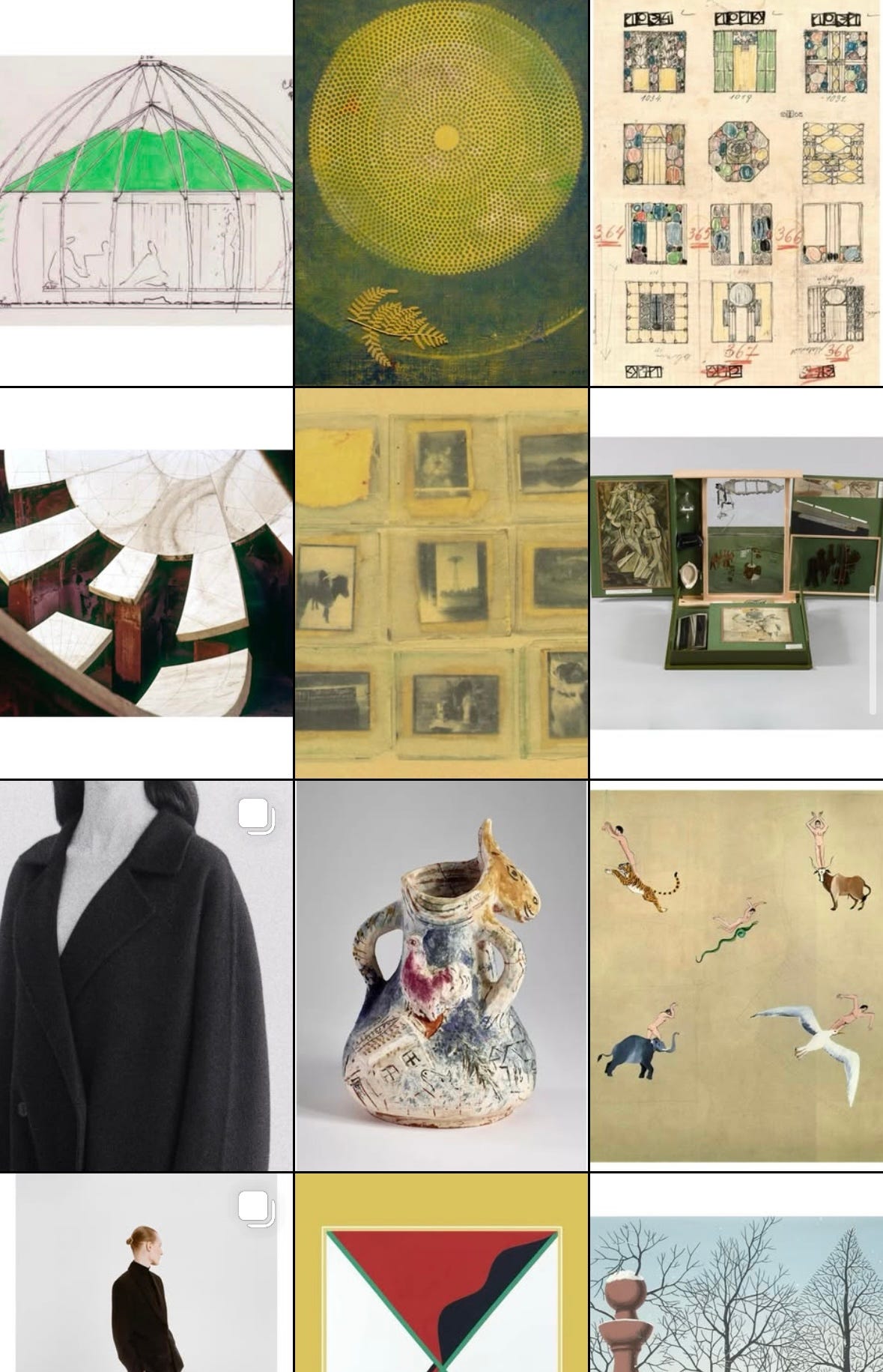
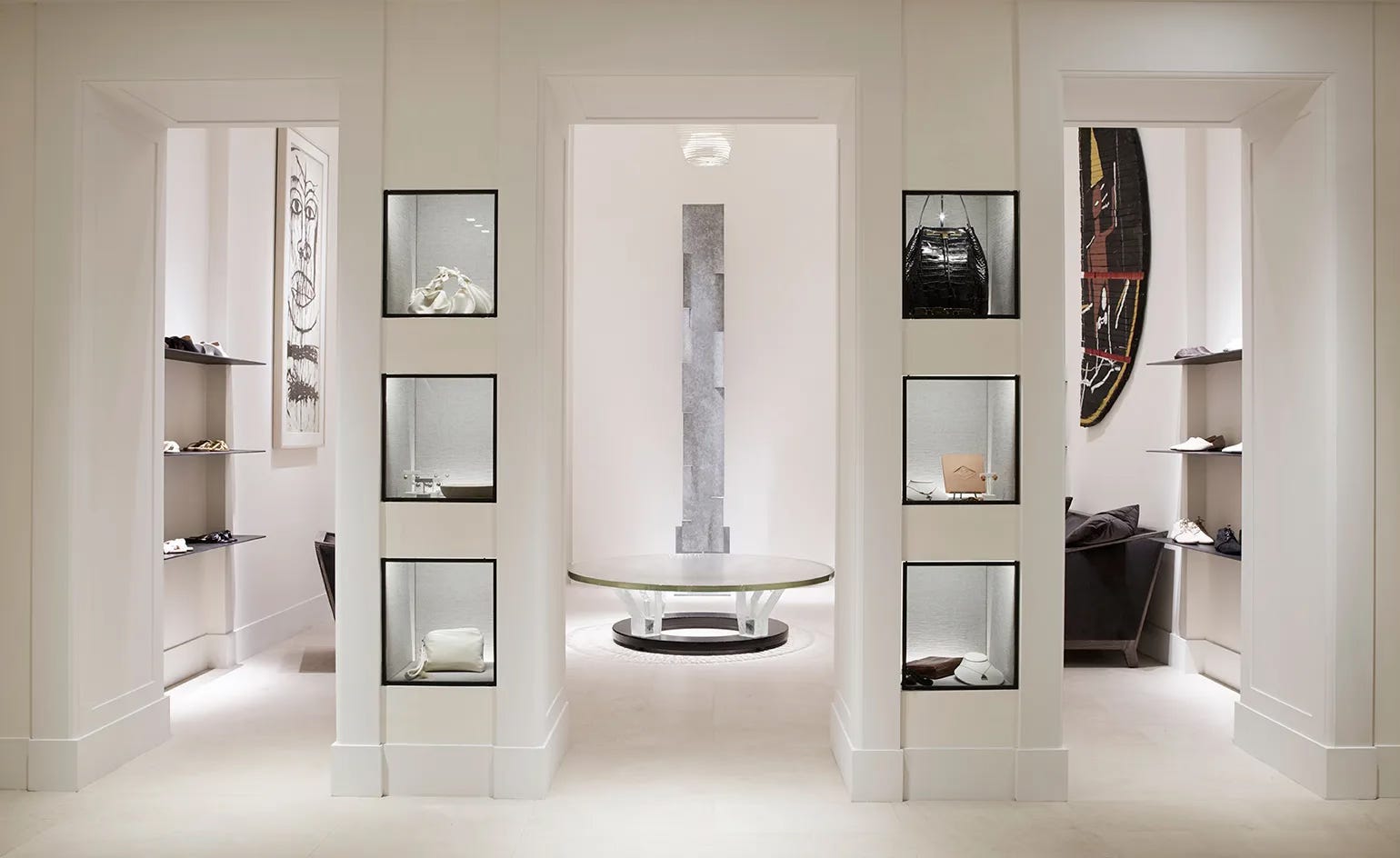
The Row’s New York store, on the Upper East Side, in a brownstone with a massive winding limestone staircase at its center, feels like a cross between The Guggenheim and the home of a socialite grandmother, who danced at a party once with Paul Newman and almost married a Rockefeller. Like their clothing, The Row’s stores are curated to perfection, embodying a monastic asceticism. Black, beige, and cream clothes displayed neatly against white walls, brushed leather bags perched atop built-in-shelving that resembles shadowboxes, along with staged mid-century furniture and various art pieces. The Row’s New York store, as well as their various other locations, are more akin to art galleries than clothing stores. Their Instagram account provides a similar feel, filled with photographs of artwork by artists such as Marcel Duchamp and Anni Albers, with various pictures of clothes by the brand interspersed selectively throughout. This positioning with art, specifically minimalist art, is a conscious alignment on The Row’s part, centering themself within the artistic movement of minimalism.
The founders of The Row are Mary Kate and Ashley Olsen, former child stars, who quit acting and went into the fashion industry, established The Row in 2006. My fascination with The Row stems from my childhood adoration of them, when I stole my mom’s magazines and poured over the pages, oogling over the twins’ style. I’ve also been a lifelong lover of minimalism, even before I knew the name. This essay corresponds with an art history class I recently took, in which we explored the minimalist art movement of the 60’s and 70’s. I could have written about any number of minimalist brands for this essay, like Issey Miyake. I decided on The Row because of how closely the brand attempts to align itself with the art world and because it has come to be defined as THE minimalist brand in recent years.
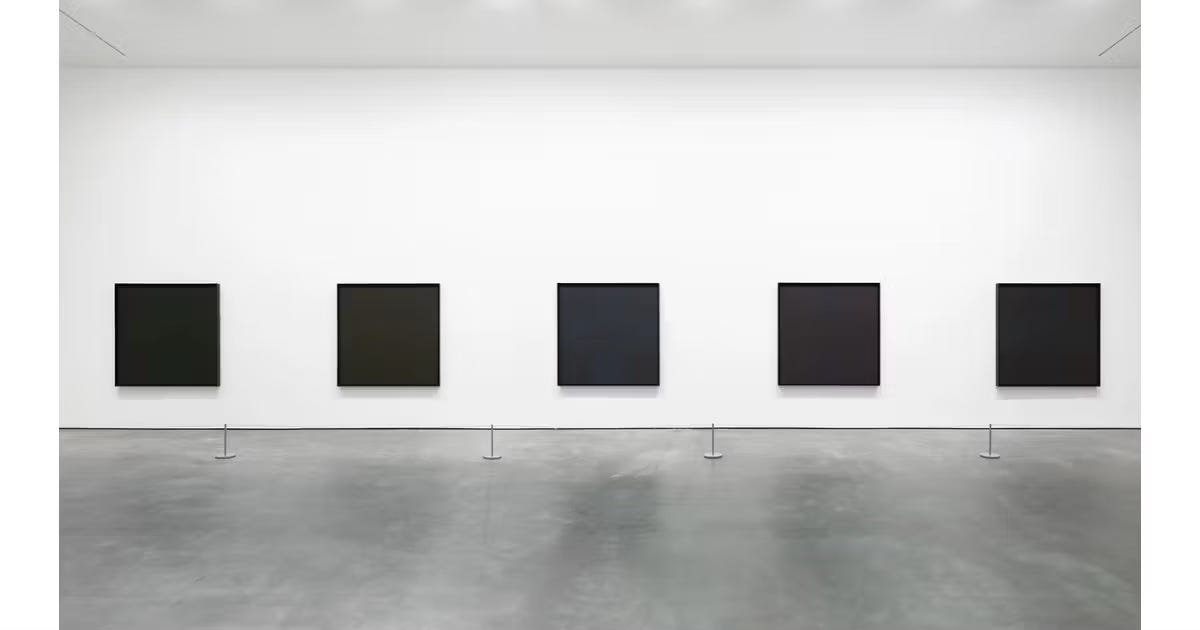
Minimalism is defined by its simplicity: clean lines, and a focus on form. It takes art and its construction down to its bare essentials. There is a rejection of performative emotion through aesthetics, with the extreme restraint of the art. At first glance, Ad Reinhardt’s black paintings appear to be painted all black with a singular color, but they are instead compositions created through varying shades of black or nearly black. There is a rejection of performative emotion through aesthetics, with the extreme restraint of the art.
Barbra Rose, in her groundbreaking 1965 essay ABC Art, in which she begins to define the then emerging Minimalist art movement, says, “Like the mystic, in their work these artists deny the ego and the individual personality, seeking to evoke, it would seem, that semi-hypnotic state of blank consciousness, of meaningless tranquility and anonymity.” Such a description would not be out of place in an advertisement for The Row, a designer brand renowned especially for its fidelity to anonymity, no logos or brand name marring the leather of a sumptuous black bag. And if an all-black canvas allows viewers to contemplate feelings of the abyss and eternal nothingness, so too can a sweater or bag achieve such a feat, especially when staged in such an austere environment like in The Row stores.
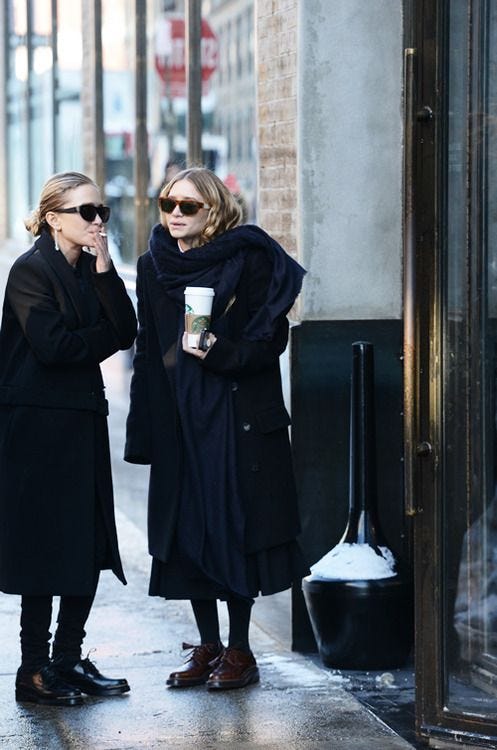
As adults, contrary to their childhood stardom, Mary Kate and Ashley Olsen have become illusive figures, very rarely giving interviews. They are often spotted, attempting to evade paparazzi, wearing their own designs, styled in such a way as to provide a bohemian twist, or bag lady aesthetic. They’s style is a masterclass in personal style. They use minimalism as a base for their sartorial self-expression. The brand’s fashion mimics the types of pieces they are drawn to, but doesn’t totally replicate their style, allowing for more consumers of their product. Perhaps a part of the brand’s concern for anonymity reflects Olsen’s attempt to transcend childhood stardom and elevate their brand outside of, and above, a tacky celebrity fashion line.
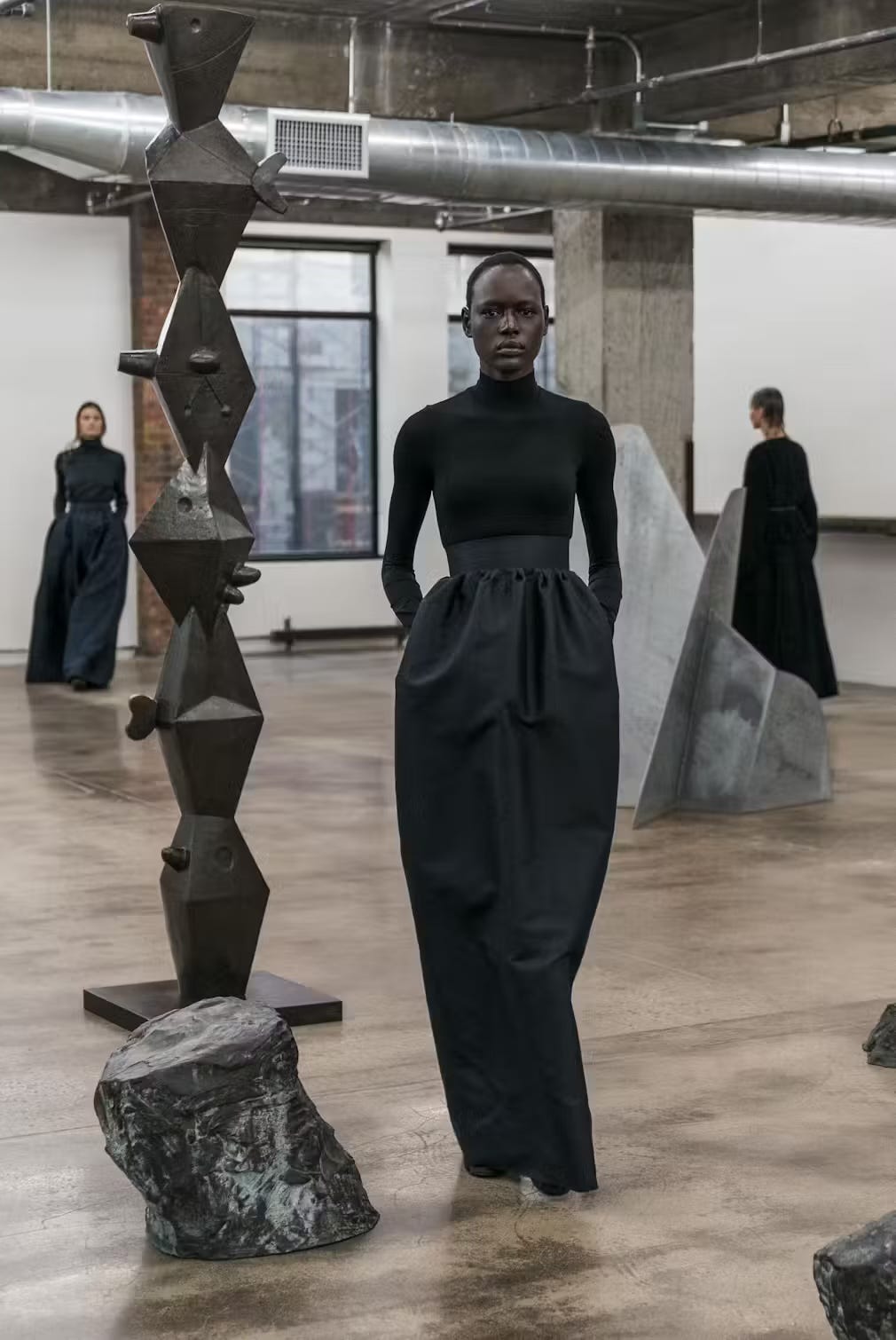
In 2018, The Row collaborated with Dakin Hart, the senior curator of The Noguchi Museum, for the catwalk. Models strutted between Isamu Noguchi’s abstract sculptures like Bird Song, and his large cold grey stones. Cream coats with exquisite tailoring on leggy models, beside tall flowy sculptures, both with a focus on natural material and color. Noguchi and The Row are artists primarily focused on structure and form, with one expressing this through marble and stone, and the other chiffon and silk. For both, the stripping down of art and garments, and an eradication of boundaries, is how these objects can and will endure.
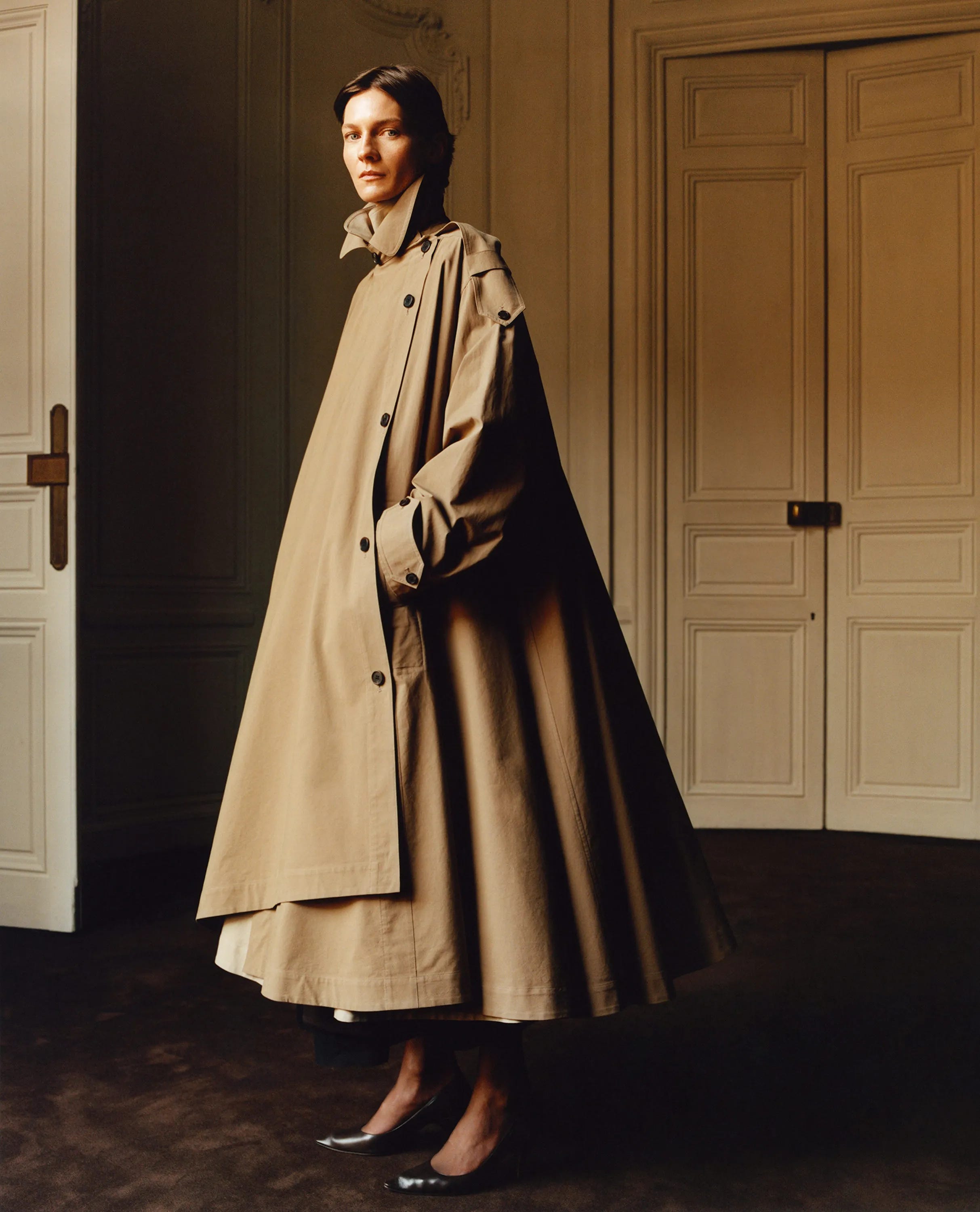
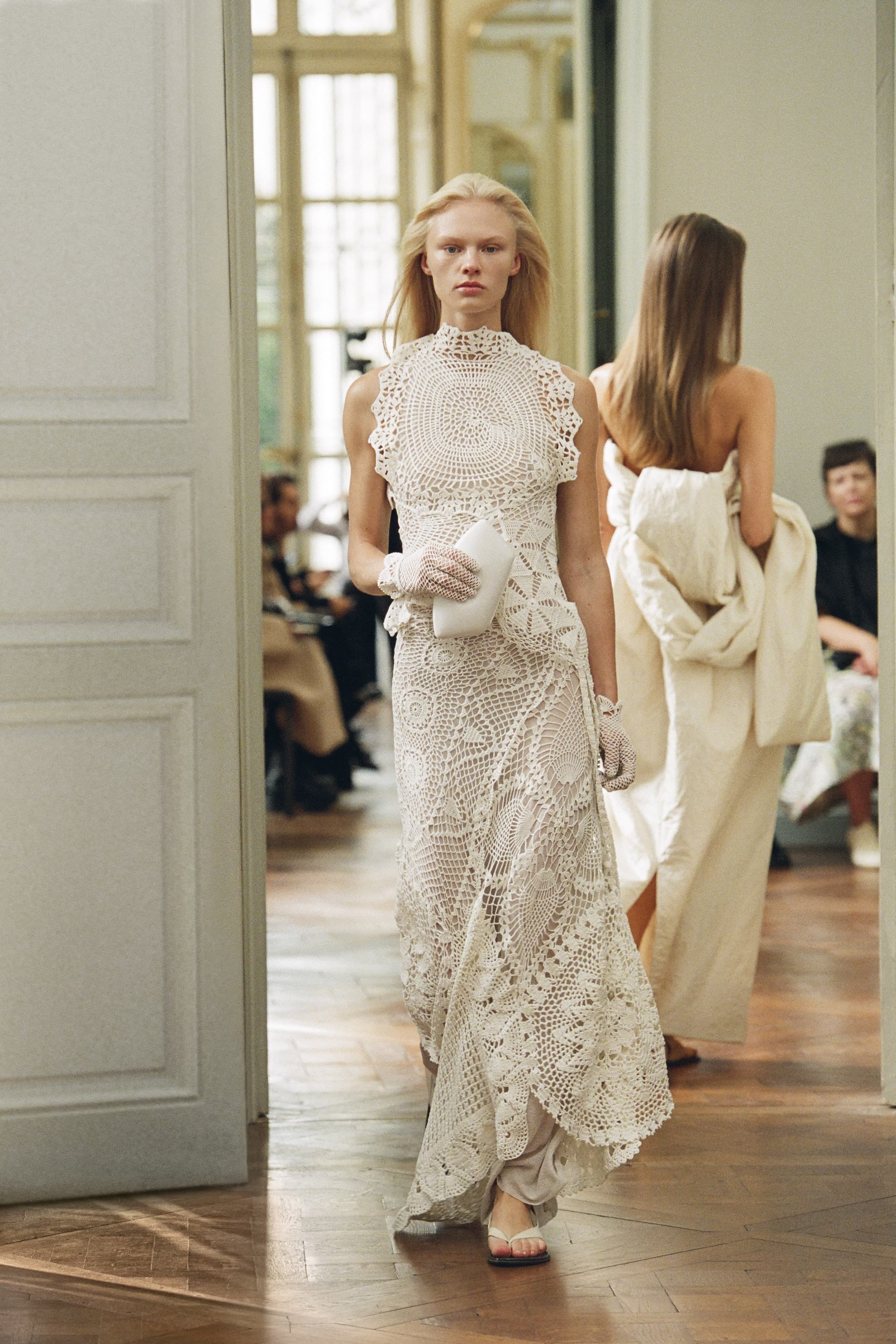
The Row is not function over form. Rather, it is true cohesion of the two. The clothes feel wearable for real bodies. The lines of their clothes are clean and sharp, and they are often tailored loosely with precision and intent. Clothes look and feel luxurious; a simple midi skirt is elevated by an unexpected gathering at the waist, or a black dress is draped just-so at the shoulders to create interest. While there has been some criticism that The Row’s clothing can lean towards matronly, it is instead, a conscious unalignment with the male gaze. The clothes can also be mixed and matched to the wearer’s desire to create any shape they deem fit, allowing for more variety and play. Of course, this play is limited to a certain tax bracket with the clothes. Though inspiration can be taken and adapted by all.
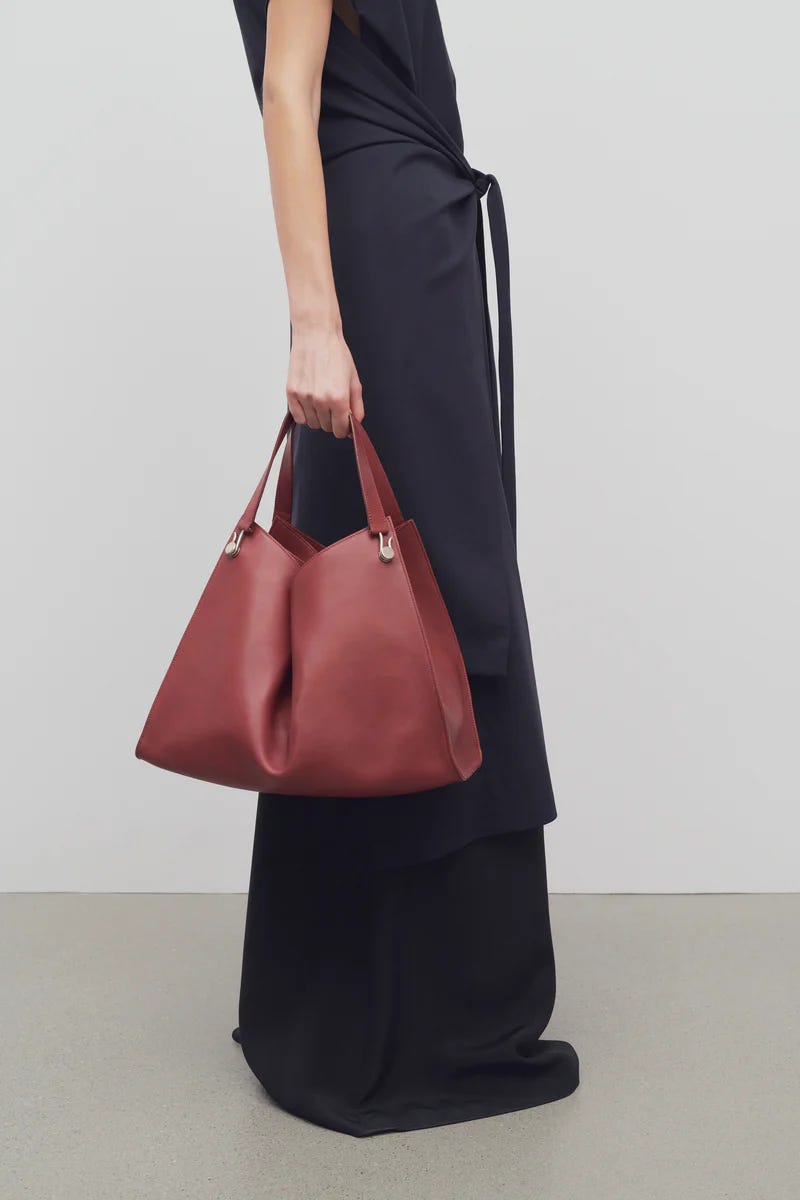
Their handbag selection is made up primarily of neutral colored leather and suede, interspersed occasionally with muted greens, blues, and orange reds. The material sourced for the collection is of the highest quality, buttery soft and smooth, with no detail spared. These details are of the utmost importance when presenting such ostensibly simple collections. A bag’s main feature is the sharp lines. Like the brand’s clothes, the form of their bags takes center stage. The Half Moon Bag, a small purse curved-off kilter to one side, creating a shape reminiscent of a crescent moon, is sharp and hard, to further enhance the bag’s contours. Their Alexia Bag on the other hand lacks the rigidity of the Half Moon. It is described on the website as a “deconstructed tote” with “architectural draping,” in which the middle of the bag folds inward on itself, to create a loose undone quality to what could have been a simple tote.
Repetition in fashion is often criticized, but like Ad Reinhardt’s series of black paintings, there is meaning behind creating a signature and constantly redoing what has already been done. This, like in art, adds nuance to garments. It is similar in the way clothes take on new meaning as the owners re-wear them, styling in new and perhaps old ways, gaining an intimacy with the clothing itself, so the two may, over time, meld with one another.
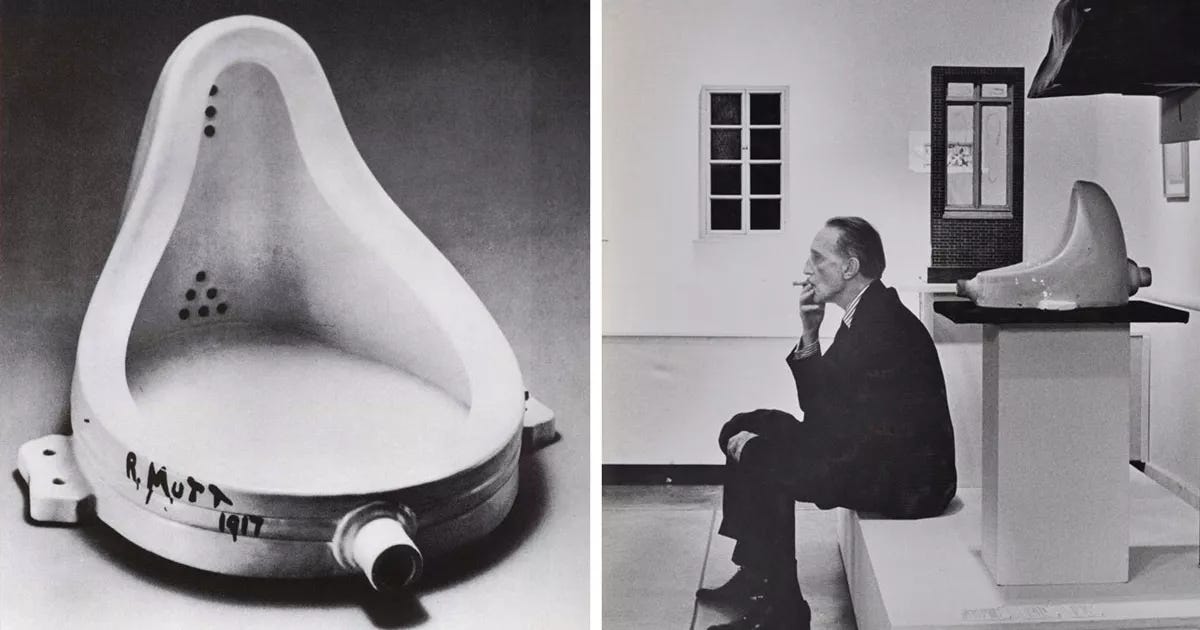
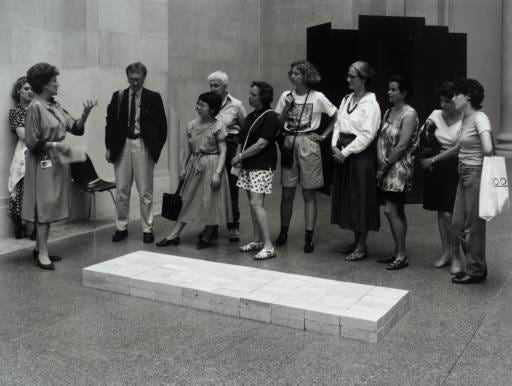
If minimalist art attempts to deconstruct the boundaries of artistic merit and practice, then so too does its counterpart in fashion. The Row began with the Olsen’s attempt at creating the perfect T-shirt. A garment known for its ease of use and comfort, though not often considered a part of luxury fashion. A cotton and silk T-shirt from The Row costs $750. A comparison can be made to Duchamp’s urinal or Equivalent VIII, Carl Andre’s bricks. These are objects that test the boundaries not only of art but also of the art world. What constitutes art and fashion, and what are the limits, particularly monetarily? This question can only be answered by art dealers, museums, and patrons of The Row.
However, for every boundary-testing T-shirt, The Row's carefully crafted leather goods are far more worthy of their price tags. It wouldn’t be smart business otherwise. Just look at the reaction from consumers to Balenciaga. And the Olsens are nothing if not savvy businesswomen.
This is capitalism after all. In which art is turned into a commodity by the rich, with little regard for its artistic merits, and instead used as a status symbol.
What The Row is attempting to create is not only a formidable fashion brand, but an elevation in the high art sphere, with all the thorny issues that come with art and consumerism today. Their ethos aligns with minimalist visionaries from the past. That is why such careful precision and detail is given to their spaces. They are transporting customers, not only for a luxurious and exclusive experience, but to create their own museum of art/clothes/harmony/deconstruction. They are carefully eradicating the already thin lines between one art form and another, and looking to pay homage to their influences, while forever looking forward, as they create, destroy, and recreate again.